
Towing is safe for most cars when the correct towing method is used. Flatbed towing lifts all four wheels off the road, making it the safer option for AWD, EVs, and low-clearance vehicles. Wheel-lift towing keeps two wheels on the road and works well for standard cars on short tows, but it can create drivetrain risks for AWD vehicles.
Not sure which method your car needs? 📞 Call Now | 💬 WhatsApp Us Now
Many drivers worry that towing itself can damage their car. It can, but the main issue is using the wrong towing method for the vehicle. The risk is not towing itself. It is using the wrong truck for the wrong vehicle. For example, towing an AWD car on two wheels can put stress on the drivetrain. A low-clearance car can also scrape during loading. An EV may require specific towing procedures to avoid unwanted wheel or motor movement. When the correct method and equipment are used, towing can be safe for different types of vehicles.
This guide explains how flatbed and wheel-lift towing work, which vehicles suit each method, and how JC & CO’s team and fleet are equipped to choose the right towing method for each vehicle.
Flatbed vs. Wheel-Lift — How Each Method Works
| Flatbed | Wheel-Lift | |
|---|---|---|
| How it works | Hydraulic platform tilts to ground level, and the vehicle is loaded fully on top | Hydraulic yoke lifts the front or rear wheels only |
| Wheels on the road | Zero | Two |
| Best suited for | AWD/4WD, EVs, low-clearance, luxury/classic, accident-damaged vehicles | Standard FWD/RWD cars, short local tows, tight-access spots |
| Key risk | Minimal when used correctly | Drivetrain or undercarriage risk on AWD or low-clearance cars |
| Typical use case | Long-distance or high-value/sensitive vehicles | Quick local recovery for an everyday vehicle |
How Flatbed Towing Works
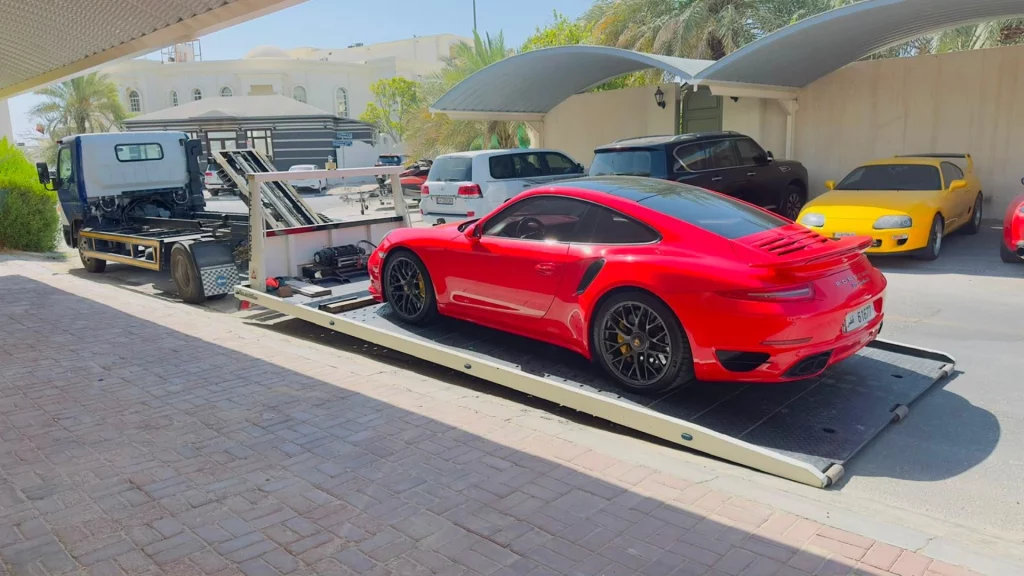
A hydraulic platform lowers to ground level. The vehicle is then driven or winched fully onto the platform. The bed returns to a horizontal position, keeping the vehicle off the road during transport.
How Wheel-Lift Towing Works
A hydraulic yoke lifts either the front or rear wheels off the ground. The other two wheels remain on the road and roll behind the truck.
This method is quicker to set up and can work well for standard vehicles on short distances. It can also be useful in tight spaces where a longer flatbed truck may be harder to position.
When Wheel-Lift Towing Is Safe to Use
Wheel-lift towing is a suitable and widely used method for many standard front-wheel-drive or rear-wheel-drive vehicles on short, local tows.
It is not automatically an unsafe or inferior option. The important point is whether the vehicle and towing situation are suitable for wheel-lift equipment.
Wheel-lift towing can also help when access is limited and a larger flatbed truck cannot easily navigate to the location.
When Wheel-Lift Towing Becomes a Risk
Wheel-lift towing needs more care with AWD and 4WD vehicles. The two wheels left on the road continue to rotate while the vehicle is being towed. Depending on the vehicle, this can put stress on the drivetrain and differential.
Low-clearance, luxury, and classic cars can also have problems with loading angles. The bumper, undercarriage, or other parts may scrape if the vehicle is lifted incorrectly.
Electric vehicles also require specific towing procedures. Unwanted wheel rotation can create risks for some EV drivetrains. We cover this in more detail in our EV Towing guide.
Why Flatbed Reduces the Risk
With flatbed towing, all four wheels are lifted off the road. This avoids the wheel rotation associated with wheel-lift towing and reduces the risk of drivetrain strain or scraping during transport.
That is why flatbed towing is commonly preferred for AWD, EVs, low-clearance, luxury, and high-value vehicles. See our guide on flatbed towing for luxury & sports cars for the full breakdown.
A Professional Towing Company Carries Both — and Knows Which to Use
The safest towing method is not simply about choosing one method for every vehicle. It is about matching the equipment to the vehicle and the towing situation.
JC & CO operates a full range of towing vehicles, including light, medium, and heavy-duty trucks, as well as specialized full-down, covered, and EV-capable equipment.
This allows the team to dispatch the right truck for the job instead of using the same truck for every vehicle. Our trained operators assess the vehicle and situation before dispatch and select the appropriate towing method.
This is also an important difference between a professional company and an individual freelance driver. See our full comparison on towing company vs freelance tow truck driver.
What Businesses Should Ask About Equipment Before Signing a Towing Partner
If you are a fleet operator, dealership, or corporate client evaluating a towing partner, ask about the equipment before signing an agreement.
A provider should be able to handle different towing requirements instead of using one truck type for every vehicle.
Check whether they can handle standard vehicles, AWD/4WD vehicles, EVs, and low-clearance or luxury vehicles without requiring a different towing provider for each type.
Ask whether the towing method is selected based on the vehicle and situation or whether every job receives the same standard treatment.
For the full checklist of what to evaluate in a long-term towing partner, see our guide on how to choose a reliable towing company in Qatar.
For fleet and corporate accounts, contact our team to discuss ongoing coverage:
Frequently Asked Questions
Yes, towing can be safe when the correct method and equipment are used. The main risk comes from using unsuitable equipment for the vehicle, such as using wheel-lift towing for a vehicle that requires all four wheels off the road.
Flatbed towing places the entire vehicle on a platform and keeps all four wheels off the road. Wheel-lift towing lifts only the front or rear wheels while the other two remain on the road.
It can. The wheels that remain on the road continue to rotate during towing. Depending on the vehicle, this can put stress on the drivetrain and differential. AWD and 4WD vehicles are generally better suited to flatbed towing.
Not necessarily. Wheel-lift towing is a suitable method for many standard vehicles on short, local tows. Flatbed towing is generally the safer choice for AWD, EVs, low-clearance, luxury, and high-value vehicles.
It depends on the vehicle’s drivetrain, ground clearance, vehicle type, and whether it is electric. If you are unsure, give the towing company your vehicle’s brand and specifications so they can confirm the appropriate towing method.
Flatbed towing is generally the safer option because all four wheels remain off the road. This avoids the wheel rotation associated with wheel-lift towing.
Flatbed towing is commonly preferred for EVs because it keeps all four wheels off the road. However, the correct procedure depends on the specific EV, so the towing provider should follow the manufacturer’s towing requirements.
Flatbed towing is generally preferred for luxury and sports cars because it keeps the wheels off the road and reduces the risk of scraping low-clearance components during transport. Covered transport can also provide additional protection from sun, dust, and road conditions.
It depends on the vehicle and equipment. A low-clearance vehicle can be more difficult to load safely with a wheel-lift system because the lifting angle may cause the bumper or undercarriage to scrape. A flatbed can provide a safer loading method.
Wheel-lift towing can be suitable for standard FWD or RWD vehicles, especially for short local tows or locations where a flatbed has limited access.
Yes. JC & CO operates a full range of towing equipment, including flatbed, covered, and standard towing vehicles. The team matches the appropriate truck to the vehicle and towing situation before dispatch.
JC & CO Has the Right Truck for Every Vehicle
Towing is safe when the method matches the vehicle — flatbed for AWD, EVs, and low-clearance or high-value cars; wheel-lift for standard vehicles on short, local tows.
JC & CO Transport and Equipment Rental Services brings a professional team with a full equipment range and the judgment to match the right truck to every vehicle, serving individual drivers and long-term B2B partners across Qatar.
For fleet and corporate accounts: 💬 WhatsApp Us or 📩 info@jctransportqatar.com
