
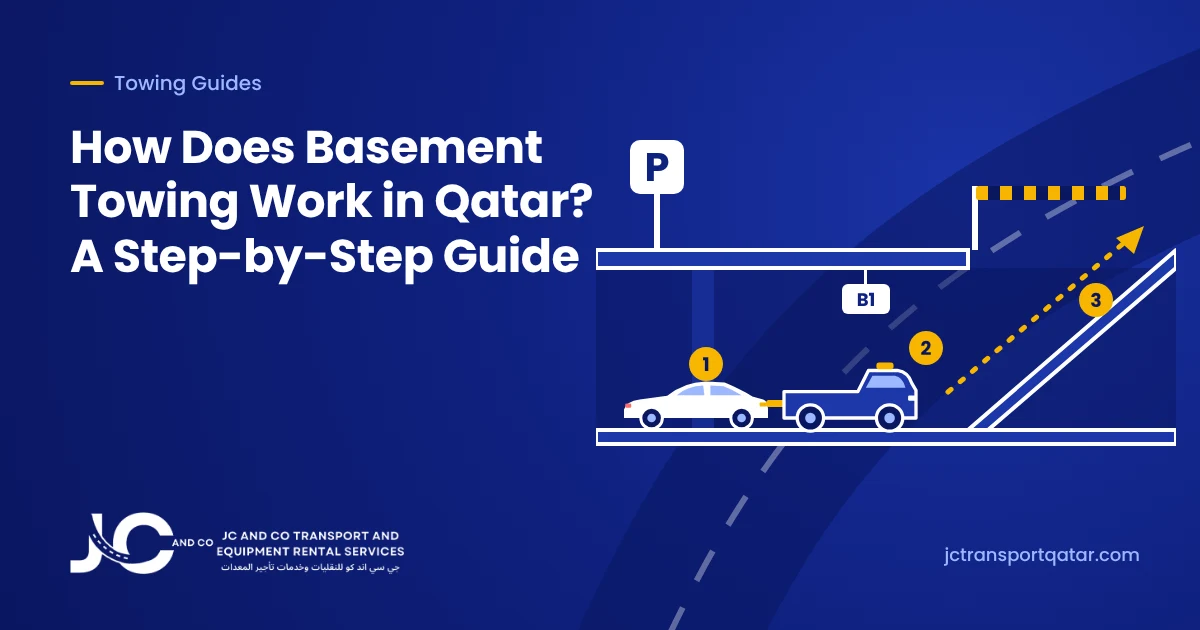
Basement towing is a specialized recovery service for cars stuck in underground or low-clearance car parks where standard tow trucks cannot enter. The process involves five main steps: sharing your location and car details, assessing the access and vehicle, dispatching a suitable low-clearance unit, safely moving and securing the car, and bringing it up the ramp for transport.
Car stuck in a basement right now? 📞 Call Now | 💬 WhatsApp Us Now
A standard tow truck is often too tall or too long to enter a basement car park. A stuck car may need a specialized vehicle and a different recovery method.
Basement car parks have limited space, low ceilings, pipes, pillars, steep ramps, and parked vehicles. Operators must work carefully to avoid damaging your car, other vehicles, or the building.
This guide explains how basement towing works step by step, what affects the job, and what individuals and property managers should look for in a provider. To book the service, visit our Basement Towing service.
Basement Towing vs. Standard Towing: What's the Difference?
| Factor | Standard Towing | Basement Towing |
|---|---|---|
| Truck | Full-size truck that is too tall for most basements | Purpose-built, low-clearance units |
| Access | Open roads and ground-level parking | Underground, confined and low-ceiling car parks |
| Handling | Quick loading in open spaces | Careful movement around pillars, ramps and obstacles |
| Planning | Minimal planning in straightforward situations | Access and vehicle checked before dispatch |
Why a Normal Tow Truck Can't Reach a Basement Car
The main problems are truck height and length. Basement entrances often have limited clearance, tight turns, and steep ramps. A standard tow truck may not be able to enter safely. Sending the wrong truck can waste time and delay the recovery.
Why Basement Recovery Needs Specialized Handling
Basement car parks leave little room for mistakes. Operators must work around pillars, parked cars, low ceilings, and other obstacles. The right equipment and trained operators help reduce the risk of damage during recovery.
How Basement Towing Works: Step by Step
Step 1: Call or WhatsApp With Your Details
Share your location, basement level or parking bay, car make and model, and the problem. Tell the team if your car will not start, has a flat tyre, has been in an accident, or has locked wheels.
Step 2: The Team Assesses the Situation
Before dispatch, the team checks the entrance height, ramp layout, available space, and your vehicle’s condition. This helps determine which towing unit and crew are suitable for the job.
Step 3: A Low-Clearance Unit Is Dispatched
The team sends a purpose-built basement towing vehicle with trained operators. This is more suitable than sending a standard tow truck that may not fit inside the car park.
Step 4: Safe Entry and Access
The operators enter the basement slowly and check for low ceilings, pipes, pillars, and other obstacles. Where necessary, they coordinate with building security or management to ensure safe access.
Step 5: Preparing and Moving the Vehicle
If your car cannot roll or steer, the team prepares it for recovery. Wheel dollies may be used where needed to move the vehicle without dragging it across the ground or scraping its underside.
Step 6: Loading and Securing the Car
The team loads the car using suitable equipment and secures it with protective straps. This helps prevent the vehicle from moving during the recovery and while travelling up the ramp.
Step 7: Exit and Transport
The car is carefully brought up the ramp to ground level and transported to your chosen workshop or home. If the vehicle needs a flatbed or covered truck for the next stage, the appropriate vehicle can take over.
See our guide on flatbed vs. wheel-lift towing to understand which method may suit your car.
What Affects a Basement Towing Job?
Several factors affect the recovery method, time, and cost.
- Clearance and ramp layout: The entrance height, ramp angle, and available space help determine which towing unit can enter safely.
- Vehicle size and condition: Standard cars, SUVs, and light vehicles may need different handling. Larger or damaged vehicles require additional planning. For larger vehicles, see Heavy Duty Towing.
- Whether the car rolls and steers: Locked wheels, steering problems, or accident damage can change the recovery method.
- Obstructions and distance: Pillars, parked vehicles, tight turns, and the distance to the destination can affect the time and cost.
The cost of basement towing depends on the vehicle, access conditions, recovery complexity, and distance. The team can provide a quote based on your specific situation rather than a fixed rate for every job.
If your car has accident damage, explore our Car Recovery service. Electric vehicles may require specific towing procedures, which we explain in our EV towing guide.
Why Choose a Professional Company, Not a Freelance Driver
Basement recovery requires suitable equipment, careful planning, and trained operators. A professional towing company can offer several advantages over a single freelance driver:
- The right equipment: A professional company can provide the right towing vehicles instead of relying on a single general-purpose truck.
- A trained team: Operators assess the situation and follow a planned recovery process.
- Proper documentation: Invoices and service records can help with insurance claims and business records.
- Backup capacity: Multiple vehicles and operators can help reduce delays when one team is busy.
Read our full comparison: towing company vs. freelance driver.
For Property Managers, Malls, Hotels and Fleets
If you manage a building, car park, hotel, mall, or vehicle fleet, basement towing may be a recurring requirement. Choosing the right provider can help you manage these situations more efficiently.
Look for a towing company that offers:
- Purpose-built low-clearance equipment
- Trained operators who follow building security procedures and access rules
- 24/7 availability
- Clear invoicing and flexible business payment terms
- One point of contact for multiple locations
Use our checklist: how to choose a reliable towing company in Qatar.
To discuss ongoing basement coverage for your property or fleet:
Frequently Asked Questions
The team checks the basement access and your vehicle’s condition before dispatching a suitable low-clearance unit. The operators then move and secure the car, bring it up the ramp, and transport it to your chosen destination.
Usually not. Many basement entrances have low ceilings, tight turns, and limited space. Basement towing uses specialized low-clearance vehicles designed for these conditions.
The price depends on your vehicle, basement access, recovery complexity, and travel distance. JC & CO can provide a quote based on your situation.
Yes, depending on the vehicle’s condition and access. Tell the team about the accident damage when you call so they can assess the situation and prepare suitable equipment.
Yes. JC & CO serves individual drivers and long-term business clients, including property managers and fleet operators.
Why JC & CO for Basement Towing in Qatar
JC & CO Transport and Equipment Rental Services is a structured towing company, not a one-truck operation. Founded by mechanical engineer Shibin Samuel, the company follows an assessment-first approach with trained operators and proper documentation.
Our fleet includes light, medium, and heavy-duty towing vehicles, along with specialized recovery units. This allows the team to assess the situation and select suitable equipment for different towing requirements, including basement recovery, flatbed towing, covered transport, and EV towing.
JC & CO serves individual drivers and long-term business partners across Qatar, backed by two generations of towing expertise.
